


A Practical Guide for Brake Parts Buyers & Technicians
Ask most drivers: "Does your car still have drum brakes?" They'll probably say no. But pop off a rear wheel on most sedans, crossovers, and light trucks – you'll find drums. They're not outdated. They're just doing a different job than front discs.
Here's what you need to know about how drum brakes work, why the wheel cylinder matters, and how to pick a quality replacement.
1. The Six Core Parts of a Drum Brake
A rear drum brake has six main components. Learn their names – you'll see them on every service order.
- Backing plate – The steel base bolted to the axle.
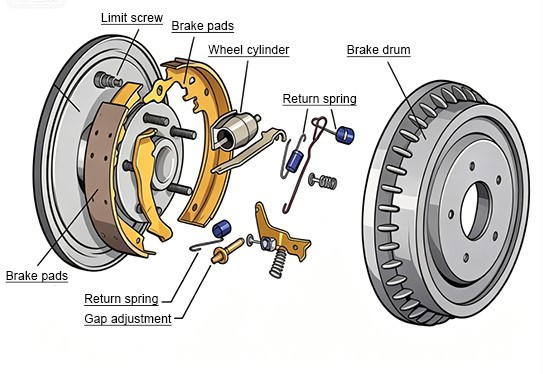
- Brake drum – Cast iron bell that spins with the wheel.
- Brake shoes (primary & secondary) – Curved steel with friction material. One leading, one trailing.
- Wheel cylinder – Hydraulic actuator with two pistons, cup seals, dust boots, return spring, and bleeder.
- Return springs – Pull shoes back when pedal is released.
- Adjuster mechanism – Keeps shoe-to-drum clearance correct as linings wear.
The wheel cylinder is the only part that moves the shoes. No wheel cylinder, no braking.
2. How It Works – Three Steps
Step 1 – Pedal down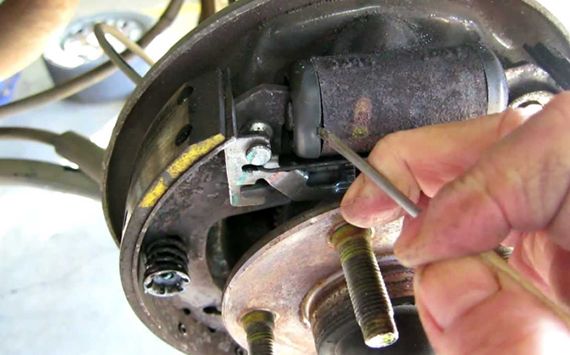
Brake fluid from the master cylinder pushes into the wheel cylinder. Pressure forces both pistons outward – in opposite directions.
Step 2 – Shoes contact drum
Each piston pushes its brake shoe against the spinning drum. Friction slows the wheel.
Step 3 – Pedal released
Pressure drops. Return springs pull the shoes back. Pistons retract as fluid returns to the reservoir.
The cup seals inside the cylinder face inward. Higher pressure pushes the seal lip harder against the bore wall – that's how it seals without leaking.
3. The Self‑Energizing Effect – Why Leading and Trailing Shoes Are Different
 This is the detail that separates a parts changer from someone who actually understands drum brakes.
When the drum rotates forward, the leading shoe (facing the front of the vehicle) gets pulled into the drum by friction. This wedging action multiplies the applied force – about 70% of the stopping power comes from the leading shoe alone. The trailing shoe contributes only about 30%.
That's why leading shoes wear faster, and why you can't swap the shoes around. The self‑energizing effect also means drum brakes can generate strong stopping force with less hydraulic pressure than discs – one reason they're still used on rear axles.In reverse, the roles swap.
4. Drum vs. Disc – Not One Winner, Two Roles
Front discs handle 70‑75% of the braking work. They need heat dissipation and good pedal feel – that's discs.
Rear drums handle the rest, plus the parking brake, at lower cost. That's why the standard setup on most passenger cars is discs front, drums rear.
Drums aren't obsolete. They're just working where they make sense.
5. Common Failures – The Wheel Cylinder Is Usually the Problem
Most drum brake issues trace back to one component.
- Leakage – Cup seals dry out or get damaged. Brake fluid soaks the linings, causing pull and reduced stopping power.
- Sticking piston – Corrosion or debris jams a piston. If stuck retracted → one shoe only. If stuck extended → dragging brake, heat, pull.
- Contaminated shoes – Once linings soak up fluid, they lose friction unpredictably.
Quick check: pull the drum, peel back the dust boot. Any fluid or rust pitting on the piston means replace the cylinder. Don't try to rebuild – the bore is usually damaged.
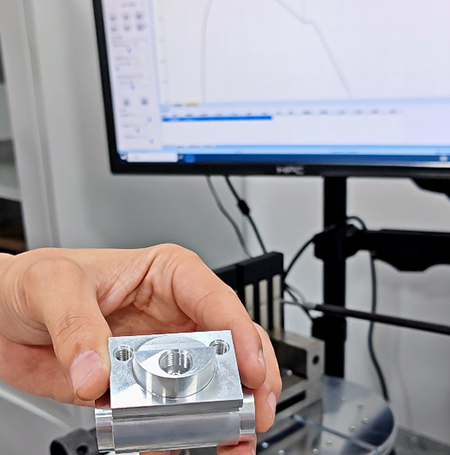

6. Selecting a Quality Wheel Cylinder – What Actually Matters
Not all wheel cylinders are the same. Here's what to look for.
Material
Cast iron is traditional and durable. Aluminum is lighter but needs a coated bore (hard anodizing) to resist wear.
Seals
Must be EPDM rubber – the only compound approved for DOT3/DOT4 brake fluid. Sub‑grade nitrile seals will swell or harden within a year.
Bore finish
The cylinder bore needs a cross‑hatch honed finish with roughness Ra 0.2‑0.4 μm. Too smooth → seal squeal and poor lubrication. Too rough → internal leakage before it even hits the road.
Precision
- Bore roundness ≤ 0.005 mm
- Piston diameter tolerance ± 0.010 mm
- Clean, burr‑free threads (M10×1.0 or M12×1.5)
Testing
A reliable supplier should perform:
- Static leak test – 15 MPa for 30 minutes, leakage ≤ 0.5 mL/min
- Burst test – ≥ 25 MPa (3,625 PSI)
- Salt spray – 480 hours no base metal corrosion
What to avoid
- Raw unlined bores – will leak quickly
- Non‑EPDM seals – early failure
- No test documentation – no trust
At SY‑PARTS, every wheel cylinder gets machined in‑house (bore finish 0.2‑0.4 μm Ra, cross‑hatch honed), fitted with EPDM seals, and 100% leak‑tested before packaging. Same standard we use for Japanese OEM supply.
7. Summary – Know the System, Choose the Right Part
Drum brakes aren't going away. They're on most rear axles because they work, they're cost‑effective, and they integrate the parking brake without extra parts.
The wheel cylinder is the heart of the system. Most failures – leaks, sticking, pull, drag – come back to that small aluminum or iron cylinder.
When you select a wheel cylinder, check the material, the seal compound, the bore finish, and the test data. That's how you avoid comebacks.
SY‑PARTS – Create Real Value For Customers