


When you're sourcing brake master cylinders, wheel cylinders, or clutch hydraulics, the surface treatment is not just about looks. It directly affects corrosion resistance, wear life, seal performance, and how the part holds up under real-world conditions.
Different materials-aluminum alloys, grey cast iron, and steel-require different treatments. And the same treatment applied to the wrong component can cause premature failure.
This guide explains the key surface treatment processes used in hydraulic brake component manufacturing, what each one does, and why the choice matters.
Why Surface Treatment Matters for Brake Components
Brake cylinders operate in harsh environments. They're exposed to:
- Brake fluid (DOT3, DOT4, DOT5.1) – chemically aggressive
- Temperature extremes – from cold starts to sustained high-temperature braking
- Road salt, moisture, and debris – corrosion triggers
- Constant mechanical friction – pistons moving against cylinder bores
Without proper surface treatment, an aluminum piston will wear out in weeks. An iron cylinder body will rust in days. Seals will fail. The part will leak.
The right surface treatment extends service life, maintains hydraulic integrity, and prevents costly returns.

Aluminum Components: Anodizing
Aluminum is the most common material for brake master cylinders, wheel cylinders, and clutch cylinders. But raw aluminum is soft and corrosion-prone. Anodizing solves both problems.
Natural (Clear) Anodizing – Type II
What it is: An electrochemical process that creates a transparent 5-15μm oxide layer on the aluminum surface. The layer is sealed afterward to close the microscopic pores
Where it's used:
- Exterior surfaces of aluminum brake and clutch cylinders
- Components where OEM-like appearance is required
- Parts that need laser marking or printing after treatment
Key characteristics:
- Silver-grey metallic appearance – matches original equipment finish
- Moderate corrosion resistance (200-400 hours salt spray)
- Surface hardness around HV 150-200
- Does not change dimensions significantly
- Lower cost than hard anodizing
Visual identification: Silver-grey with a semi-gloss finish, like a high-end aluminum laptop. Slightly "grippy" to the touch. Non-conductive – a multimeter will show no continuity.
Hard Anodizing – Type III
What it is: A more aggressive version of anodizing, performed at low temperatures (-5°C to +5°C) with higher current density. The result is a much thicker 25-50μm (up to 100μm) ceramic-like oxide layer
Where it's used:
- Pistons – the moving component that must withstand constant friction
- Cylinder bores – the surface the piston slides against
- Heavy-duty and commercial vehicle applications
- Any aluminum component subject to wear
Key characteristics:
- Dark grey to jet black appearance – the darker, the thicker the layer
- HV 350-500 hardness – approaching tool steel
- Excellent wear resistance – extends piston life dramatically
- Good corrosion resistance
- Dimensionally thicker – machining must account for 10-25μm per side
Visual identification: Deep black, completely matte (zero gloss). Feels like ceramic or polished stone. A fingernail will not scratch it.
Quick rule: The darker and more matte the black finish on an aluminum piston, the better the hard anodizing. Deep black with zero gloss = quality.
Iron Components: E-coat and Dacromet
Grey cast iron (HT250) is still widely used for brake cylinders, especially in commercial and heavy-duty applications. Iron rusts quickly in humid conditions – often within 24 hours of exposure. Surface treatment is not optional.
Electrophoretic Coating (E-coat)
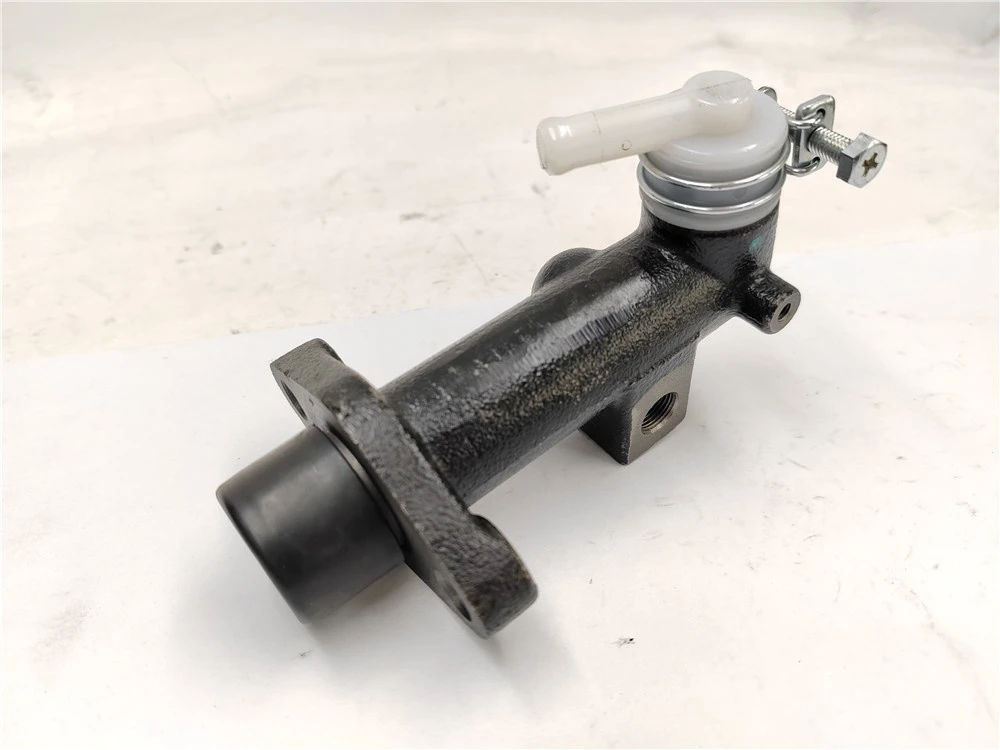
What it is: An electrically driven coating process where the iron component is immersed in a water-based paint bath. An electric field deposits the coating uniformly on every surface – including internal threads, blind holes, and recesses that spray painting cannot reach. The coated part is then baked at 180-200°C to cure the paint.
Electrophoretic Coating (E-coat)

| AM124527 |

| 47520-F1010 |
| 8-94447-208-0 |
Where it's used:
- Exterior surfaces of iron brake master cylinders and wheel cylinders
- Iron proportional valve bodies
- Iron clutch cylinders
- Any iron component requiring full coverage corrosion protection

Key characteristics:
- Uniform black coating, semi-gloss finish
- 15-25μm film thickness
- 400-600 hours salt spray resistance
- Covers internal threads and blind holes – no missed spots
- Resists brake fluid, diesel, and other automotive fluids
Visual identification: Pure black with a visible semi-gloss sheen (like automotive paint but slightly duller). Smooth to the touch. A fingernail will leave a faint scratch. The coating is visible inside threaded holes – that's how you know it's E-coat, not spray paint.
Dacromet (Zinc-Aluminum Flake Coating)
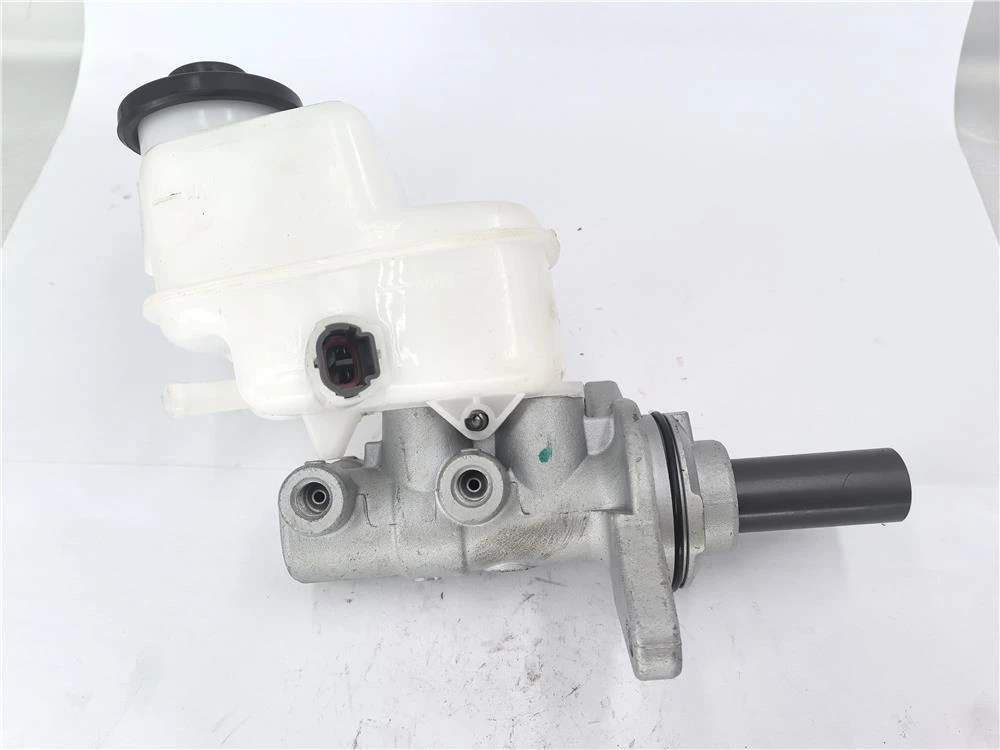
What it is: A water-based coating containing zinc and aluminum flakes in a chromate binder. Applied by dip-spin or spray, then cured at 300°C. The result is a 4-8μm silver-grey layered coating
Dacromet (Zinc-Aluminum Flake Coating)
| 47201-42360 |

| 8-97946-626-1 |

| 47207-26010 |
Dacromet provides triple protection:
- Physical barrier – overlapping flakes create a labyrinth that blocks corrosion paths
- Sacrificial protection – zinc corrodes first, protecting the iron base
- Passivation – the chromate binder forms a chemically stable layer

Where it's used:
- Iron cylinder bodies (upgrade option over E-coat)
- High-strength fasteners and bolts (10.9 and 12.9 grade)
- Springs and spring clips (zero hydrogen embrittlement risk)
- Components exposed to high temperatures (up to 300°C)
- Parts shipped to high-salinity environments (coastal regions, island nations)
Key characteristics:
- 1000+ hours salt spray resistance – roughly double that of E-coat
- Zero hydrogen embrittlement – safe for high-strength steel
- Withstands 300°C continuous operation
- Silver-grey, completely matte finish
- Lower surface hardness than E-coat – scratches more easily
Visual identification: Silver-grey matte finish with a subtle metallic texture. Looks like fine sandpaper but smoother to the touch. No gloss whatsoever. On iron components, silver-grey + matte = Dacromet; silver-white + glossy = zinc plating.
| Feature | Dacromet | E-coat | Zinc Plating |
| Salt spray resistance | 1000+ hours | 400-600 hours | 72-200 hours |
| Temperature resistance | 300°C | 180°C (cure limit) | 100°C (peels) |
| Hydrogen embrittlement risk | Zero | Zero | Present (unsafe for high-strength steel) |
| Color | Silver-grey matte | Black semi-gloss | Silver-white/blue-white |
| Coverage | Excellent (dip process) | Excellent (electric field) | Poor (deep holes don't plate) |
| Cost | Medium-high | Medium | Low |
| Environmental | Low VOC, RoHS options | Low VOC, water-based | Contains Cr6+ waste |
Other Surface Treatments
Sandblasting (Abrasive Blasting)
What it is: High-pressure air (0.4-0.8 MPa) propels abrasive media (glass beads, aluminum oxide, etc.) at the component surface to remove casting scale, oxides, and burrs. Creates a uniform matte texture.
Where it's used:
- Pre-treatment before anodizing or coating
- Removing old coatings from returned parts
- Creating a consistent surface for laser marking
Visual identification: Uniform matte silver-grey, completely non-reflective. Feels like 400-600 grit sandpaper. Fingerprints will show clearly on sandblasted-only surfaces.
Chromate Conversion Coating
What it is: A chemical dip process that creates a sub-micron conversion layer on aluminum. Does not change dimensions. Does not affect conductivity.
Where it's used:
- Internal passages and hard-to-reach areas where anodizing won't penetrate
- Temporary corrosion protection before further processing
- Adhesion base for adhesives or sealants
Visual identification: Rainbow gold or yellowish tint. Rotate the part under light and you'll see iridescent color shifts – that's the signature of chromate conversion.
Black Oxide (Bluing)
What it is: A hot caustic oxidation process (140-150°C) that creates a 1-2μm Fe₃O₄ (magnetite) film on iron. Very thin – almost no dimensional change. Corrosion resistance is minimal.
Where it's used:
- Lowest-cost short-term rust prevention (inventory/transit protection)
- Parts requiring zero dimensional change
- Decorative matte black finish
Visual identification: Pure black, completely matte, extremely thin. A key will scratch through to bare grey iron immediately. If it scratches easily and reveals grey metal underneath, it's black oxide – not E-coat.
Zinc Plating + Passivation
What it is: Electroplated zinc layer (5-15μm) with a trivalent chromate passivation topcoat. Zinc corrodes sacrificially to protect the steel base.
Where it's used:
- Low-strength fasteners (Grade 8.8 and below)
- Brackets, mounting hardware, washers
- Non-stressed external accessories
Important warning: Zinc plating introduces hydrogen embrittlement risk. Hydrogen atoms penetrate the steel grain structure during electroplating, which can cause sudden brittle fracture under load. Never specify zinc plating for pressure-bearing cylinder bodies or high-strength fasteners.
Visual identification: Silver-white or blue-white with visible metallic gloss. Look closely and you'll see a fine "snowflake" crystal pattern. Blue-white + glossy = zinc plating.
Electroless Nickel Plating
What it is: An autocatalytic chemical deposition process – no electricity required. Deposits a uniform nickel-phosphorus alloy layer (5-25μm) on all surfaces, including deep blind holes.
Where it's used:
- Premium aluminum brake cylinders (customer-specified)
- Extreme corrosion environments (marine, heavy salt exposure)
- Aluminum cylinder bores (alternative to hard anodizing)
Visual identification: Semi-bright silver-white with a warm yellowish tint (nickel's natural color). Feels exceptionally smooth and slippery, like stainless steel.
Selection Guide: Which Treatment for Which Component?
-
Aluminum Brake Master Cylinder
| Component Area | Recommended Treatment | Upgrade Option |
|---|---|---|
| Piston | Hard anodizing (mandatory) | - |
| Cylinder bore | Hard anodizing | Electroless nickel |
| Exterior body | Sandblasting + natural anodizing | Hard anodizing (heavy-duty) |
| Internal passages | Chromate conversion | - |
-
Iron Brake Master Cylinder
| Component Area | Recommended Treatment | Upgrade Option |
|---|---|---|
| Piston | Hard chrome (steel piston) | - |
| Cylinder bore | Phosphating + oil | - |
| Exterior body | E-coat | Dacromet (high salinity) |
| Fasteners | Dacromet (Grade 10.9+) | Zinc plating (Grade 8.8-) |
-
Brake Wheel Cylinder (Aluminum)
| Component Area | Recommended Treatment |
|---|---|
| Piston | Hard anodizing |
| Cylinder bore | Hard anodizing |
| Exterior body | Sandblasting + natural anodizing |
| Bleeder screw | Dacromet or zinc plating |
-
Brake Wheel Cylinder (Iron)
| Component Area | Recommended Treatment |
|---|---|
| Piston | Hard chrome |
| Cylinder bore | Phosphating + oil |
| Exterior body | E-coat |
| Bleeder screw | Dacromet (zero hydrogen embrittlement) |
-
Clutch Master/Slave Cylinder
| Component Area | Recommended Treatment |
|---|---|
| Piston (aluminum) | Hard anodizing |
| Cylinder bore (aluminum) | Hard anodizing |
| Exterior body (aluminum) | Sandblasting + natural anodizing |
| Exterior body (iron) | E-coat |
| Push rod | Dacromet or hard chrome |
-
Repair Kits
| Component Type | Recommended Treatment |
|---|---|
| Aluminum piston | Hard anodizing |
| Springs | Dacromet (zero hydrogen embrittlement) |
| Metal clips/clamps | Dacromet or zinc plating + passivation |
| Dust covers (metal) | E-coat (iron) or natural anodizing (aluminum) |
Quick Visual Identification Guide
- For aluminum parts:
| What you see | What it is |
| Dark grey to jet black, completely matte, fingernail won't scratch | Hard anodizing (quality) |
| Silver-grey with semi-gloss, non-conductive | Natural anodizing |
| Silver-grey completely matte, fingerprints show, feels like sandpaper | Sandblasted only (no anodizing) |
| Rainbow gold/yellow iridescent | Chromate conversion |
| Warm silver-white, slippery like stainless steel | Electroless nickel |
- For iron parts:
| What you see | What it is |
| Black with visible semi-gloss, coating visible inside threads | E-coat |
| Pure black, completely matte, scratches easily to bare grey iron | Black oxide |
| Silver-grey matte, no gloss, on iron component | Dacromet |
| Silver-white with metallic gloss, "snowflake" pattern | Zinc plating |
| Dark grey matte with crystal texture | Phosphating |
Summary
Surface treatment is not a cosmetic afterthought. It's an engineering decision that determines how long a brake cylinder will last, whether it will leak, and whether it will survive the environment it's installed in.

Key takeaways:
- Aluminum pistons must be hard anodized – no exception. Raw aluminum wears out in weeks.
- Iron bodies need full coverage – E-coat is the industry standard. Dacromet is the upgrade for high-salinity environments.
- Zinc plating has its place – but never on pressure-bearing components or high-strength fasteners. Hydrogen embrittlement is real.
- Natural anodizing is for appearance – it's fine for exterior surfaces, but it won't protect a piston or bore from wear.
- Visual inspection tells the story – the color, gloss, and scratch resistance reveal what treatment was applied and whether it was done right.

When you're comparing brake cylinders from different suppliers, look past the shiny exterior. Ask what surface treatment was applied to the piston, the bore, and the body. The answers will tell you more about the product's quality than any marketing claim.

SY-PARTS – Create Real Value For Customers
For technical inquiries or to request sample inspection reports, contact us through the website. We respond within 24 hours.