


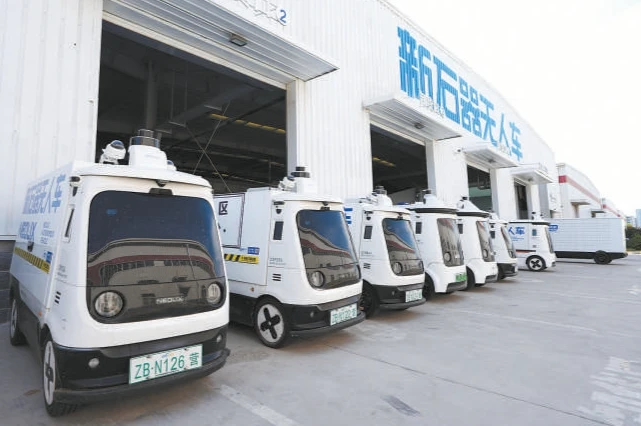
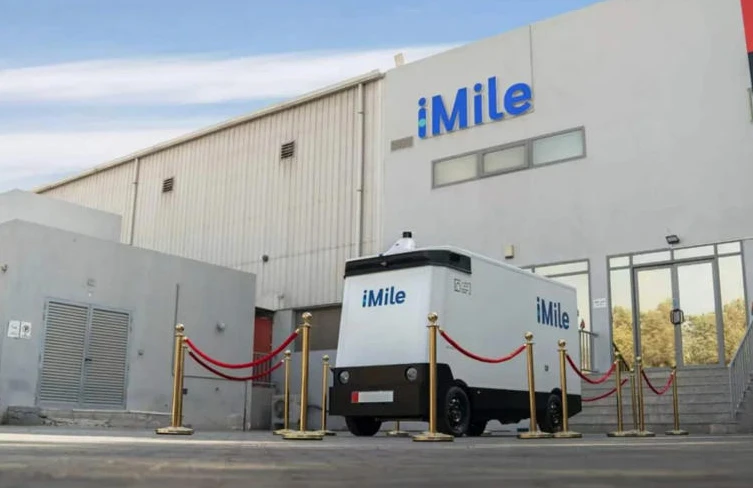
October 2026 - Neolix, a Chinese autonomous driving company focused on urban delivery, and iMile, an international express logistics brand, have announced a deep strategic partnership. The two companies will focus on Europe, Latin America, and Oceania, pushing advanced unmanned delivery technology into e-commerce parcel transport, offline retail, and fresh cold-chain delivery.
The deal is a signal. Autonomous delivery is no longer just a demo in a science park. It is moving into commercial fleets, and that shift has implications far beyond cameras and AI. It changes what vehicles need from their braking systems.
A partnership built around real delivery scenarios
In daily express delivery, Neolix and iMile plan to combine human dispatch at local depots with unmanned vehicle capacity. The goal is to handle peak periods - e-commerce promotions, holidays, and sudden demand spikes - without breaking service levels. The system is designed to keep delivery running around the clock.
For community retail, the two companies plan to pilot off-peak operations. At night, when traffic is light, unmanned vehicles can restock stores and support minute-level instant retail delivery. This not only reduces pressure on road traffic during peak hours but also addresses a familiar problem: not enough delivery labor.
Cold chain is another focus. The partners will co-develop customized unmanned delivery vehicles with intelligent temperature control systems. The aim is full-chain temperature traceability for fresh produce and frozen food - a segment where last-mile delivery often struggles with spoilage and high damage rates.
The numbers behind the announcement
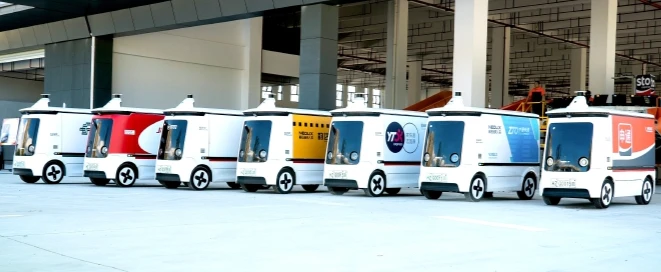
Neolix has already deployed more than 27,000 unmanned logistics vehicles worldwide. Its operations cover over 300 cities in nearly 20 countries, with cumulative safe operation exceeding 250 million kilometers.
iMile brings a self-operated delivery network covering more than 30 countries across Europe and Latin America. The company uses unified service standards and a self-developed digital system to connect information across the chain. That local operating experience matters. Autonomous vehicles do not deploy themselves. They need depots, maintenance, insurance, customer service, and local regulatory knowledge.
Yu Enyuan, founder of Neolix, said the partnership will help bring its unmanned delivery vehicles to more overseas regions and accelerate large-scale overseas deployment. Huang Zhen, founder of iMile, said the company will use its global network and localized operations to integrate autonomous driving technology with real logistics scenarios, turning it into service quality that customers can feel.
Why this matters for brake-by-wire
When people talk about autonomous delivery, they usually focus on LiDAR, cameras, and algorithms. But a driverless vehicle also has to stop. Repeatedly. Safely. Without a human foot on the pedal.
That is where brake-by-wire and redundant braking enter the picture.
In a conventional van, the driver provides a natural layer of redundancy. In an unmanned delivery vehicle, the system must provide it. A single-point failure in the braking chain is not acceptable. This is why many autonomous delivery platforms are moving toward electro-mechanical brakes (EMB), hydraulic brake-by-wire, or hybrid architectures with redundant power, communication, and actuation.
The operating profile is also different. A 7×24 delivery fleet may make hundreds of stops per day. It may operate at night, in rain, or in cold-chain conditions. Brake thermal management, wear, energy recuperation, and pedal feel simulation become engineering issues. For cold-chain vehicles, added payload and temperature-control systems increase vehicle weight, which changes braking distance and energy consumption.
Regulations are catching up. In Europe, UNECE regulations and ISO 26262 functional safety standards are shaping how autonomous commercial vehicles are validated. Fleet operators increasingly ask for ASIL-D capable braking subsystems, fail-operational designs, and clear diagnostic coverage. For suppliers, this is not just about selling a caliper or an actuator. It is about integrating into the vehicle's chassis domain and proving safety case evidence.
Cost, carbon, and the 24-hour fleet
The long-term economics are compelling. Unmanned delivery vehicles can operate 7×24. Once scaled, the comprehensive cost per delivery is expected to fall by 30% to 50%. They can also fill capacity gaps at night, in extreme weather, and in remote areas where human couriers are expensive or unavailable.
Because the vehicles are pure electric, they also cut tailpipe emissions in the last mile. For cities under pressure to reduce logistics carbon footprints, that is not a minor point.
But these benefits depend on reliability. A fleet that runs all day and night cannot afford brake fade, communication dropouts, or maintenance surprises. This is why braking architecture is becoming a board-level conversation in autonomous delivery, not just a component-level purchase.
What braking suppliers should watch
The Neolix–iMile partnership is not an isolated event. It reflects a broader trend: autonomous delivery fleets are scaling in Europe, Latin America, Oceania, and Asia. As they scale, demand will grow for brake-by-wire systems, EMB, redundant braking, chassis domain control, and functional safety expertise.
The winners will not be the suppliers who simply offer a catalog part. They will be the ones who understand route profiles, payloads, duty cycles, and regional regulations - and who can co-develop with the vehicle platform.
Custom braking solutions for autonomous delivery fleets
For fleets and OEMs sourcing braking systems, SY-PARTS offers custom brake-by-wire and redundant braking solutions for autonomous delivery platforms.
If you are developing a driverless delivery program, contact us to discuss a braking architecture matched to your route, payload, and regulatory needs.