


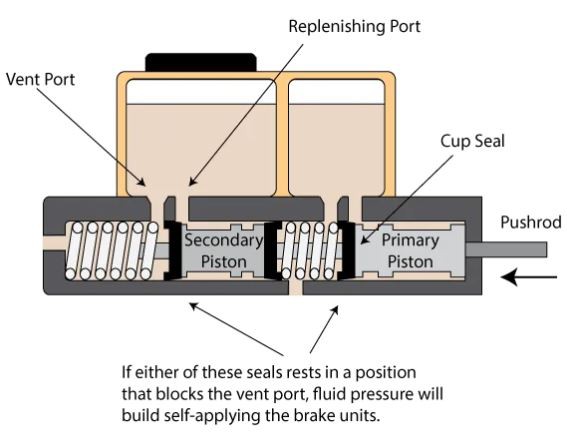
The main cylinder bore is an important factor affecting braking performance.
The change in cylinder diameter affects how you feel on the brake pedal and the brake pressure applied.
If the cylinder diameter is too large, it will produce:
Hard brake pedal-you need to press the pedal hard
Short stroke-the brake pedal stroke is not far enough to generate enough brake pressure
Because of this, you might end up with a bouncing car because you have to apply the brakes hard (due to the high resistance), and the brakes will engage too quickly.
If the cylinder diameter is too small, it will appear:
Soft brake pedal-less force is required to depress the brake pedal
Long stroke-the brake pedal needs to be depressed all the time to generate brake pressure
You will feel less resistance on the pedals, but you will step further to make the brakes work. This is not a good scenario in traffic jams or when you need to stop quickly.
Note: Drum brakes require less pressure, so the master cylinder of drum brakes is usually smaller. They usually have a one-way residual pressure valve. The residual valve helps maintain a little pressure in each brake line, so the drum brake can be engaged more quickly.