


Hydraulic clutch projects bring together component design, hydraulic performance, sealing, cleanliness and manufacturing control. For a new vehicle application, the master cylinder, hydraulic pipe and slave cylinder need to be evaluated as a system.
Use this overview to prepare an enquiry to SY-PARTS for a clutch master cylinder, concentric slave cylinder (CSC) or related hydraulic component project. Product scope, engineering responsibilities, validation, tooling and production arrangements should be agreed for the specific application.
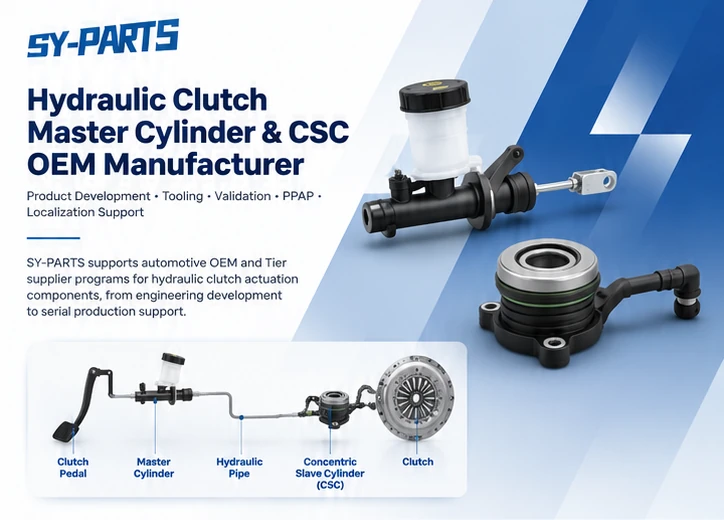
Hydraulic Clutch Actuation System
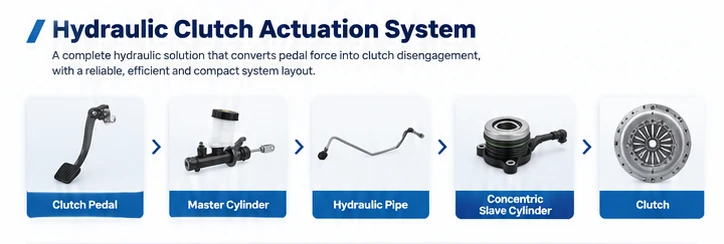
Caption: Illustrative layout with a concentric slave cylinder; the actual vehicle layout may differ.
In a hydraulic clutch system, the master cylinder converts pedal input into hydraulic pressure. Fluid pressure is transmitted through a hydraulic line to the slave cylinder, which provides clutch release movement. The illustration shows a layout using a concentric slave cylinder; vehicle designs can differ.
At the enquiry stage, define mounting interfaces, pedal input, required displacement, hydraulic connections and operating conditions. A system drawing helps the parties identify interface responsibilities before development begins.
Core Product Modules
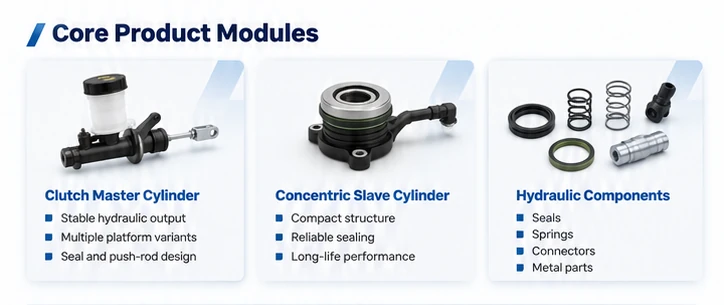
Caption: Illustrative component views; materials, dimensions and performance require project confirmation.
The clutch master cylinder, concentric slave cylinder and connecting components each have a defined role. Typical master cylinder elements include a body, piston, seals, return spring, push rod, dust boot and connectors. A CSC combines hydraulic actuation with a concentric clutch release arrangement.
For supplier evaluation, specify dimensions, materials, fluid compatibility, operating requirements and acceptance criteria. Product appearance or an OE reference alone does not establish fitment, genuine-part status or a validated performance level.
From Design to Validation
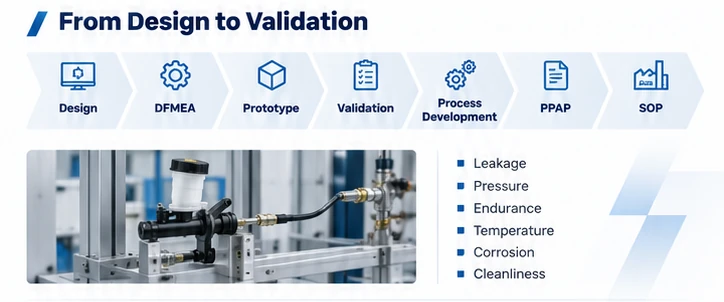
Caption: Illustrative workflow and test setting; not a record of completed SY-PARTS validation.
An OEM development plan may include design review, design failure mode and effects analysis (DFMEA), prototypes, validation, process development, production part approval process (PPAP) and start of production (SOP). The sequence and approval gates depend on the customer programme.
The agreed validation plan may address leakage, pressure, endurance, temperature, corrosion, material compatibility, cleanliness and dimensions. Define test methods, sample quantities and acceptance limits before testing; the graphic is not a validation report.
Manufacturing Process Capability
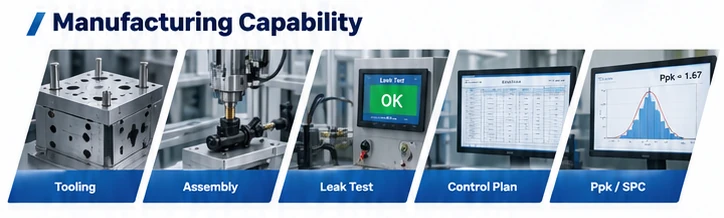
Caption: Illustration only. The displayed OK screen and Ppk > 1.67 are not verified SY-PARTS test results or capability evidence.
Consistent production depends on controlled tooling, assembly, inspection and traceability. A project quality plan may include measurement system analysis (MSA), statistical process control (SPC), process performance analysis (Ppk), special characteristics and a control plan.
Cleanliness should be considered across cleaning, protected storage, assembly, final testing and packaging. Agree the required cleanliness limits and verification method for the application. Capability values must come from a defined process, measurement system and sample set.
Localization and Industrialization
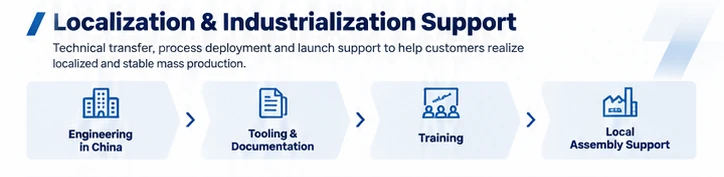
[IMAGE 6: 06-clutch-localization-industrialization_英文网站_讨论稿_20261107_v0.1.webp] ALT: Illustrative engineering, tooling documentation, training and local assembly support workflow Caption: Illustrative localization workflow; service scope is subject to project agreement.
A localization project may divide engineering, tooling, component supply, local production, assembly and testing between different parties. Define ownership, transfer deliverables, training, maintenance and approval responsibilities before equipment or tooling is released.
Discuss the proposed scope with SY-PARTS using the target location, forecast volumes, available equipment and launch requirements. Technical transfer and launch support must be confirmed in the project agreement.
OEM Quality Documentation
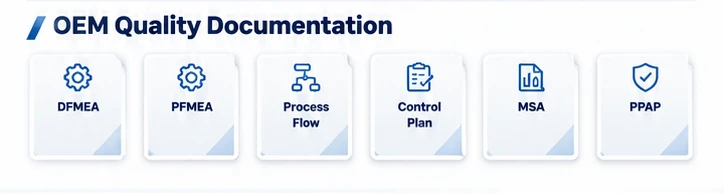
Caption: Illustrative document categories; not evidence of certification, customer approval or completed PPAP.
Customer-required documentation may include engineering drawings, DFMEA, process failure mode and effects analysis (PFMEA), process flow, control plan, MSA, inspection reports, capability studies, validation reports, traceability records and PPAP submissions.
Document scope and submission requirements should match the customer programme. A document list is not evidence of customer approval, certification or completed PPAP. Public marketing material should use generic examples rather than customer drawings or internal records.
Discuss Your Hydraulic Clutch OEM Project
Caption: Contact banner artwork. Use the working website enquiry link or form below; the pictured button is not interactive.
To prepare an initial review, share the component type, vehicle application, interfaces, operating conditions, expected annual volume, target timing and required validation or approval scope through an agreed contact channel.
Contact SY-PARTS to discuss your hydraulic clutch component enquiry. Feasibility, manufacturing scope, price, lead time and project responsibilities are subject to review and written agreement.