


Section 1 Definition and Classification of Braking System

In addition to the normal coasting deceleration, the function that can slow the car or keep it still is called the braking function. The braking function may not necessarily be called the braking function.
Dynamic system. The service brake system, parking brake system, and auxiliary brake system have their own independent components, which can be called the brake system. And the engine system
Dynamic braking, energy feedback braking, and emergency braking have only braking functions.
Classified by system and function, there are currently the following 6 types.
1. Service brake system
The service brake system is also called "foot brake", which realizes "all-wheel braking" by stepping on the brake pedal with your foot. For cars, this is four-wheel braking. The braking system needs to rely on the brake master cylinder and brake cylinders and other auto parts at the same time.
2. Parking brake system
The parking brake system is also called "handbrake". After parking, in order to keep the car in place, it breaks some of the wheels of the car. For the car, it is the rear brake.
Wheel brake. The parking brake system has independent components, which are divided into mechanical and electronic controls. At present, the mechanical type is mostly used, and the operation method is manual or
The foot controls the parking brake lever to brake the rear wheels, and the front wheels cannot be braked. This method has high reliability and low cost. A small number of cars have adopted electronic control
The car system uses a push switch to transmit a signal to the parking controller ECU, and the parking controller ECU controls the electric motor to achieve disc parking. This way section
The space for parking brake operation is saved, and the system can perform self-diagnosis, but the cost will increase a lot.
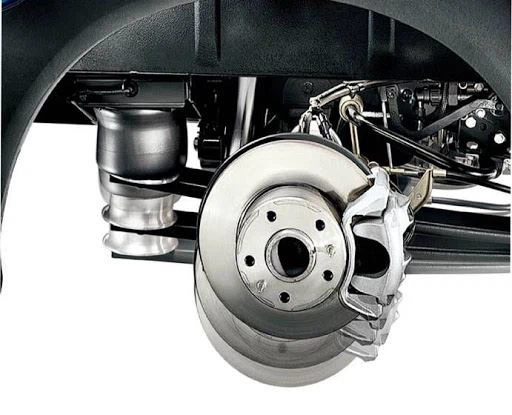
3. Auxiliary braking system for trucks
Auxiliary braking is a kind of braking system that maintains low speed on trucks. At present, there are three commonly used methods for auxiliary braking as follows:
(1) When the auxiliary brake switch is pressed or pulled down, the mechanical valve is used to close the exhaust pipe to increase the engine exhaust stroke resistance to increase the engine speed.
Motive braking effect;
(2) The rotation of the drive shaft of the drive transmission system drives the power flow retarder to convert the kinetic energy of the car into electrical energy and dissipate it into the atmosphere with thermal energy consumption;
(3) Add a hydraulic retarder at the rear of the transmission, and use the transmission system to drive the pump wheel of the hydraulic retarder to pump the oil to the turbine and then pass through the front of the engine.
The radiator in the part dissipates heat energy into the atmosphere.
4. Engine braking function
Engine braking is to move the transmission to low gear to realize the reverse transmission of the translational kinetic energy of the car body to the drive train, engine, and engine external components.
In general, it is achieved by increasing the speed of the transmission system components, the engine and the generator external to the engine, the air-conditioning compressor, and the booster pump to achieve energy conversion.
Shift referred to as engine brake. Any car that utilizes the engaged drive train has engine braking, and the transmission without engine braking function is not allowed to produce
Produced. Since it does not have its own independent system components at all, it is only an operation of the transmission, so it cannot be called a system.
5. Energy feedback braking function
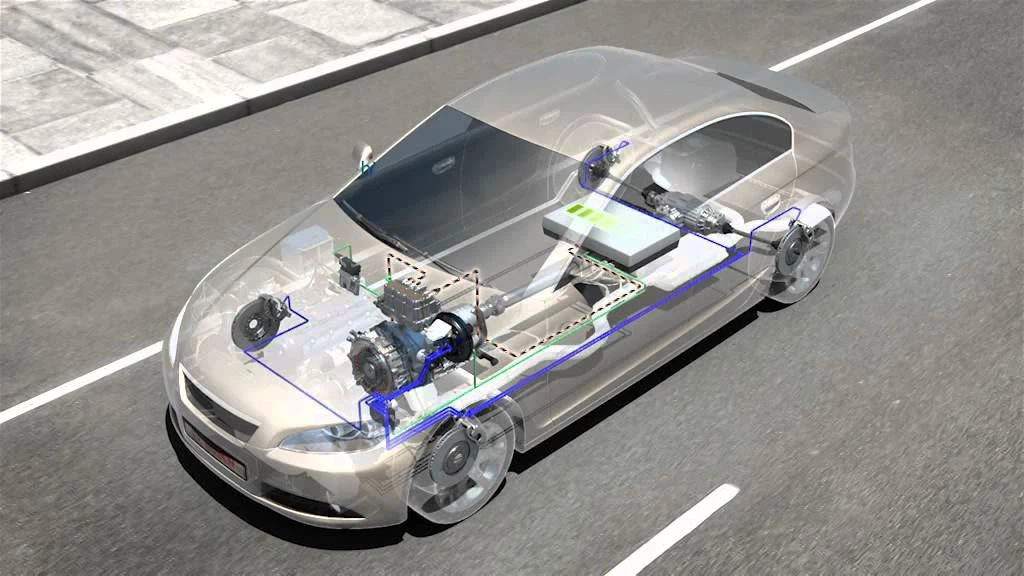
Electric vehicles and hybrid vehicles have the energy feedback braking function. The permanent magnet rotor of the generator is driven by the wheels to scan the stator to generate electricity.
The conversion of mechanical energy to electrical energy. It is not a system with independent components and mainly energy feedback. The motor is mainly used as an electric motor in the car. Motor control
The control system automatically controls the size of the feedback energy according to the deceleration of the car.
6. Emergency braking function
In driving, when the service brake fails, the parking brake and engine brake must be used to achieve parking. There is no independent emergency brake on the car. equipment. When the parking brake is used while driving, there may be a risk of tail-flicking. Therefore, superior quality brake master cylinders and brake cylinders are needed for braking treatment. Our factory is responsible for producing high-end quality products.