


1. Vehicle Structure
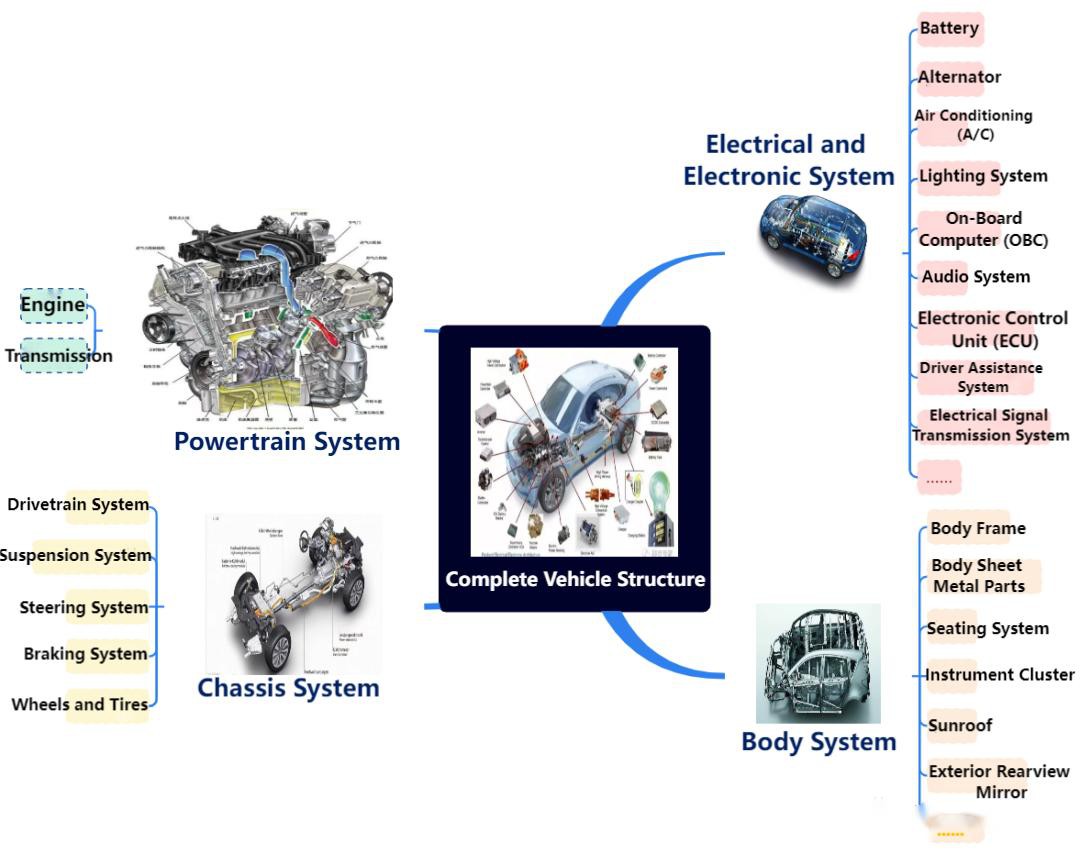
A vehicle is a complex transportation tool composed of thousands of components. Depending on its powertrain, usage conditions, and other factors, the specific structure may vary significantly. However, a typical passenger car generally consists of four major systems: the body system, powertrain system, chassis system, and electrical/electronic system.
1.1 Body System
Includes the body frame, body panels, and accessories such as seats, instrument clusters, sunroofs, and exterior rearview mirrors.

1.2 Powertrain System
Primarily composed of the engine and transmission.
1.3 Chassis System
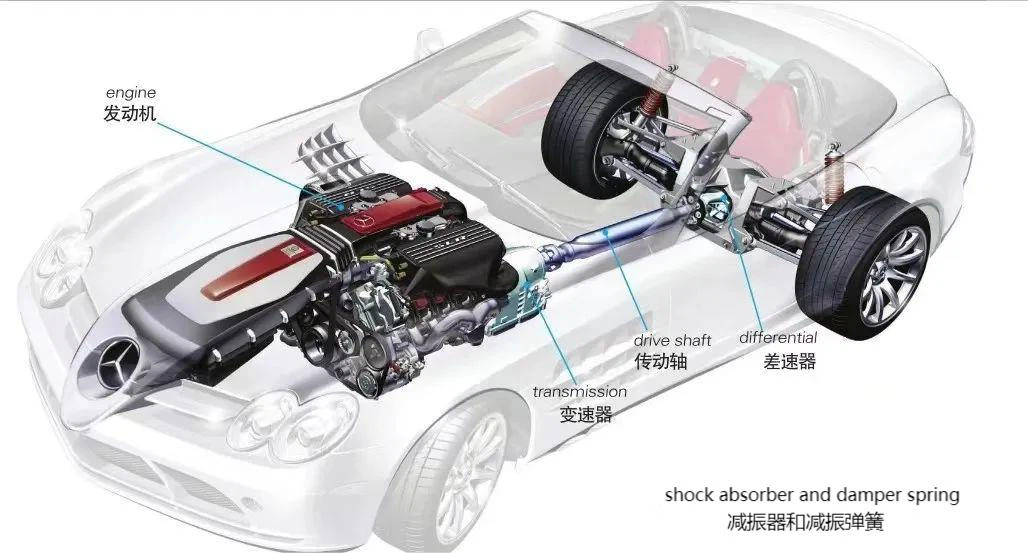
Consists of the drivetrain, suspension system, steering system, braking system, and wheels/tires.

1.4 Electrical/Electronic System
Includes the battery, alternator, air conditioning, lighting systems, onboard computers, audio systems, electronic control units (ECUs), driver assistance systems, and electrical signal transmission systems.


A standard passenger car is typically assembled from approximately 10,000 non-separable independent components, though this number varies with vehicle size and complexity. Highly specialized vehicles, such as Formula 1 (F1) race cars, may contain up to 20,000 independent components.
2. Vehicle Layout Configurations
The vehicle layout configuration significantly impacts performance, handling, safety, space utilization, and fuel efficiency.
2.1 Front Engine, Front-Wheel Drive (FF)
In this layout, the engine is positioned at the front (typically transversely mounted), and power is delivered to the front wheels.

①Advantages: Compact design, cost-effective manufacturing/maintenance, spacious front cabin, and high fuel efficiency.
②Disadvantages: Front-heavy weight distribution increases suspension load; handling stability is inferior to rear-wheel-drive (RWD) vehicles.
2.2 Front Engine, Four-Wheel Drive (4WD)
The front-mounted engine powers all four wheels, commonly used in SUVs, trucks, and off-road vehicles.

①Advantages: Enhanced traction and stability in adverse conditions (e.g., snow, mud).
②Disadvantages: Added weight, complexity, and reduced fuel economy.
2.3 Front Engine, Rear-Wheel Drive (FR)
A traditional layout where the front engine drives the rear wheels, is prevalent in sedans and sports cars.
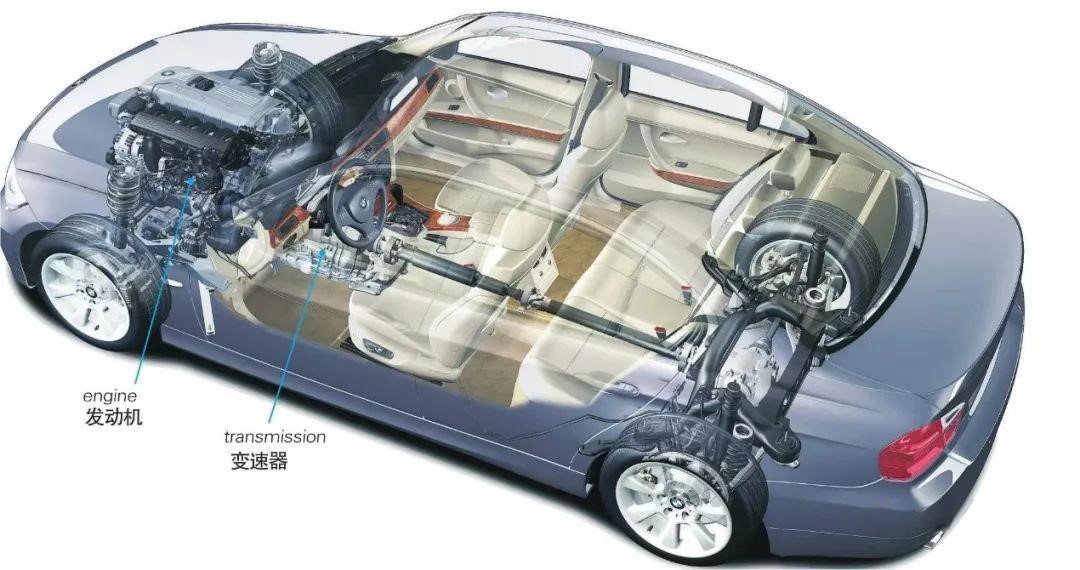
①Advantages: Balanced weight distribution and superior driving dynamics.
②Disadvantages: Higher costs, limited rear passenger space, and reduced traction on slippery surfaces.
2.4 Rear Engine, Rear-Wheel Drive (RR)
The rear-mounted engine drives the rear wheels, notably used in Porsche models and high-performance cars.

①Advantages: Agile handling and optimal weight balance.
②Disadvantages: High manufacturing costs and minimal rear storage space.
2.5 Front Longitudinally-Mounted Engine, Four-Wheel Drive (4WD)
Derived from front-engine RWD platforms, this layout splits power via a transfer case to both axles, common in large-displacement vehicles.

①Advantages: Excellent balance for high-performance applications.
②Disadvantages: High costs and limited interior space; unsuitable for family use.
2.6 Rear Mid-Engine, Rear-Wheel Drive (RMR)
The engine is centrally mounted behind the cabin, driving the rear wheels-ideal for supercars (e.g., Ferrari 488).
2.7 Front Mid-Engine, Rear-Wheel Drive (FMR)
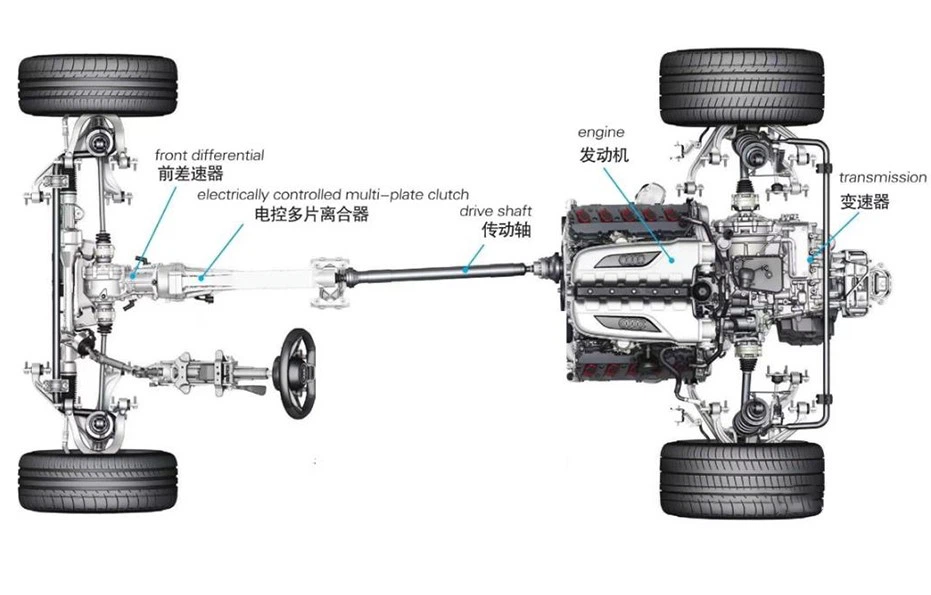
The engine is positioned behind the front axle but ahead of the cabin, driving the rear wheels, used in sports cars (e.g., Mazda MX-5).

3.Summary
Vehicle layout selection depends on intended use, performance targets, cost constraints, and market needs. Each configuration offers trade-offs in weight distribution, traction, and space efficiency. Manufacturers prioritize designs that align with their brand identity and consumer demands. Advances in engineering continue to refine these layouts for better performance and efficiency.

The vehicle's structure and layout are pivotal in defining its driving dynamics, safety, fuel economy, and market appeal. From compact city cars to high-performance supercars, these design choices ensure versatility and competitiveness, directly influencing user satisfaction and commercial success.