


Master brake pump, also called brake master cylinder, is one of the core parts of auto braking system.
And to some extent, it can be likened to the braking system's heart, in charge to convert thepressure on brake pedals and vacuum force from vacuum boosters into hydraulic force, which ispumped to wheel cylinders on the brake calipers, enabling the vehicles to stop.

mounting position of brake master cylinder
Constitutes and working principle
A master cylinder is mainly composed of cylinder block, pistons, return spring, rubber sealing elements (sealing cup), center valve, etc, without very complicated constitutes or working principle. To be in line with the development of ABS and ESP etc., master cylinder has experienced the development of compensate mode, center valve mode, and plunger mode, which are all based on the same working principle. When braking is effected, pistons are pushed by pushrod connecting with the braking pedal, and then the pressure in the working chamber formed by piston, sealing cup and shell rises to press brake fluid into wheel cylinders.

structure of tandem double-cavity brake master cylinder
Today, in most of countries and regions, passenger vehicles are demanded in the manner ofregulations to apply double-circuit braking system, in case that one circuit is leaking, the otherone can remain certain amount of braking force, That's why tandem double-cavity mastercylinder is widely seen in passenger vehicles, with just differences that some circuits are formedby diagonal wheels and other circuits by front-rear axle wheels.

Diagonal double circuit braking system

Front-rear axle double circuit braking system
Common failures
Soft feeling to brake pedal
One common fault for brake master cylinder is that it feels soft after the brake pedal being stepped down. Normally, there should be an obvious feedback force against the pressing of brake pedal, indicating braking force has been conducted on brake calipers. On the contrary however, if it feels like pressing on a sponge, that means the pressure output from the master cylinder declines or goes zero, resulting in decline or disappear of braking force on brake parts, which is quite dangerous for moving vehicles.
The most common reason for this problem is the worn and aged sealing elements inside master cylinder fail to isolate the hydraulic pressure of different cavities effectively, leading to the fluid's flowing from cavity of high pressure to the cavity of low pressure, which is also called internal leaking. It is notable that it also feels soft on brake pedal once there is leaking out problem to the hoses or wheel cylinders in the braking system. The key distinction lies in "internal leaking" or "external leaking". It mainly attributes to the problem of brake master cylinder, if there isn't visible leaking on the appearance of the braking system.
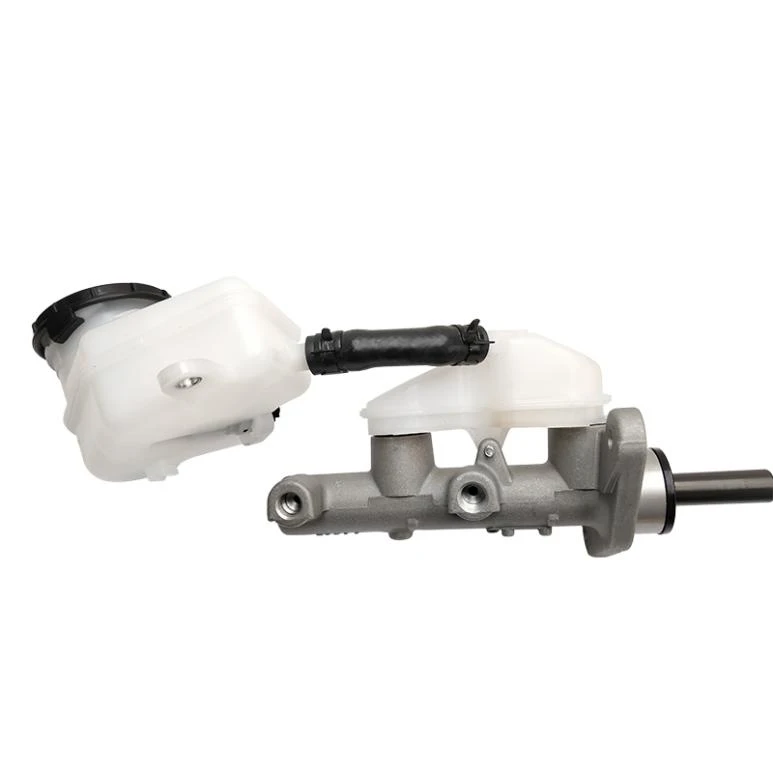
brake master cylinder
No free travel for brake pedal
It is also abnormal if it feels too hard on the brake pedal, because this is also possibly caused by a brake master cylinder in addition to by a brake booster. It can be learned from the structure of the master cylinder that at beginning of stepping down a brake pedal, the compensating holes haven't been blocked, and the working cavity hasn't been fully closed, being incapable to build up pressure, and therefore there should be existing a free travel for brake pedal at this period. Once it feels quite hard as well as no any free travel on pressing the brake pedal, it often has something to do with blocked compensating holes, which may be caused by excessive impurities in brake fluid, or by expanded or deformed master sealing cup. Beyond that, pistons inside the master cylinder move forward abnormally due to improper installation of brake master cylinder or brake booster, and then the problem above also possibly happens.
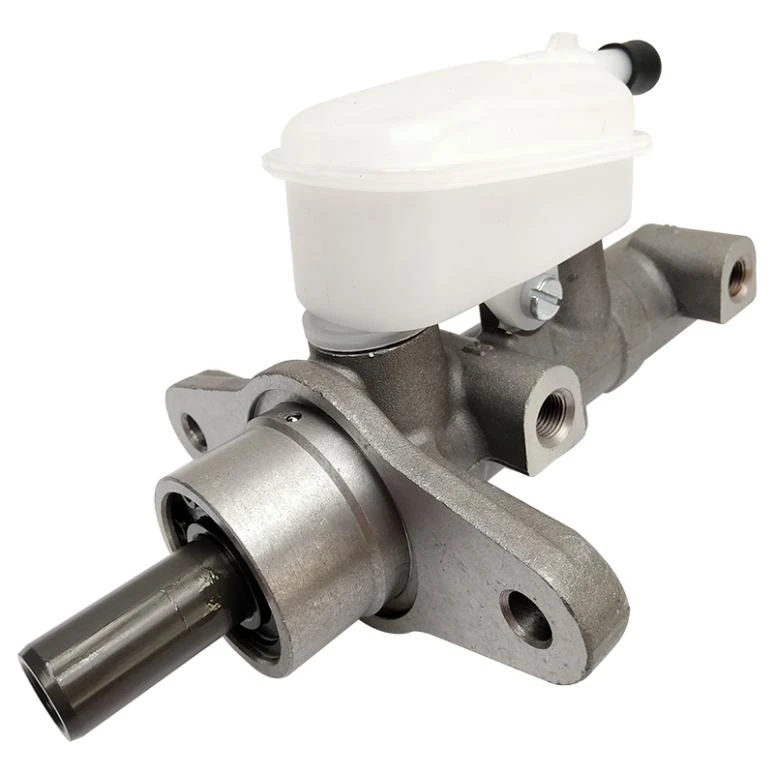
brake master cylinder
Brake fluid leaks
Leakage of brake fluid is also one of common problems to a brake master cylinder. As brake master cylinder and brake fluid tank are directly connected with each other, and therefore once the installation of them is not in place, or the sealing elements between them are aging and worn, then the brake fluid will be leaking out. In addition, there are two oil outlets on brake master cylinder in need to supply oil for two brake circuits, and the two oil outlets are usually connected with oil tube via screw thread. Once the two oil outlets are wrongly installed or the screw thread is corroded, it will also bring about the leakage of brake fluid.
Thanks to brake oil level sensor installed at the brake fluid tank in most of vehicle models, vehicle dashboard will show alarms when the liquid level is abnormal, and then you should check carefully whether there is leaking problem in the braking system.
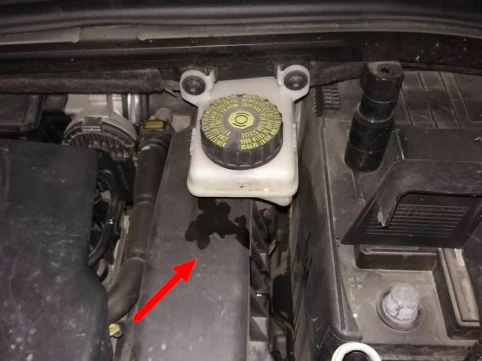
brake master cylinder with leakage
Warm Reminders from SY-PARTS
Brake master cylinder, though looks not so impressive, is however quite important for braking system. It is in so direct relation to traffic safety, that maintenance technicians should never ever overlook the inspection on it. It is in high demand to the machining precision of pistons and needle valves inside master cylinder, and the material quality of the rubber sealing parts like sealing cups and so on. And It is suggested to choose brake master cylinder with established brands and the installation should well follow the manual to eliminate any safety hazard.
Disclaimer: This article is published for the purpose of sharing automotive technical knowledge. The photos and copyright belong to the original author. If there is any infringement, please contact us for negotiation or deletion. Thank you very much!