


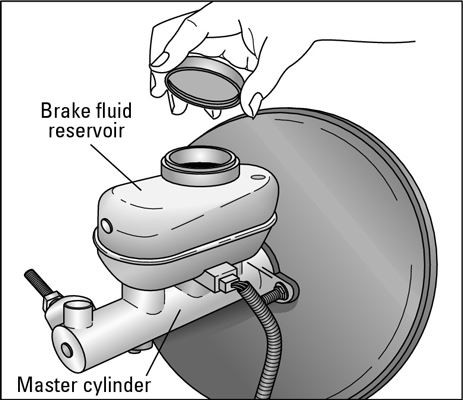
To check the brake fluid of the car, you must find the fluid reservoir. Its location depends on the type of car you own. The brake booster is located on the driver's side of the vehicle, usually near the firewall. Just in front of it, sitting on and connected to the brake master cylinder is a brake fluid reservoir, usually a plastic tank, as shown in the picture.
Older vehicles don’t have a plastic tank(instead, the master cylinder is a little metal box with a lid that you must remove to check the fluid level.)
Release the lid of a metal master cylinder with a screwdriver.

When you put your foot on the brake pedal, the fluid in the master cylinder will move down the brake line to the front and rear brakes. If the brake fluid is insufficient, air will enter the brake line and your vehicle will not be able to stop normally. Therefore, it is very important to keep enough brake fluid in the brake fluid reservoir.
Note: If your vehicle has an anti-lock braking system (ABS), please consult your owner's manual before checking the brake fluid. Some ABS systems require you to depress the brake pedal approximately 25 to 30 times before opening and checking the reservoir.
To check the brake fluid, do the following:
1. Carefully clean the top of the water tank.
A small amount of dirt falling into the fluid will cause the internal seal of the master cylinder to fail. Your brakes will start to fail and eventually fail completely.
2. Open the top of the brake fluid reservoir.
If you have a type with a small plastic water tank on the top, just unscrew the water tank cover. If you have a metal master cylinder that contains a reservoir, use a screwdriver to pry the retaining clip off the top.
Do not leave the brake fluid tank with the master cylinder uncovered or opened for too long. Brake fluid absorbs water to prevent it from depositing in hydraulic components and corroding them. If moist air enters the brake fluid for only 15 minutes, the brake fluid will be damaged. So don't dawdle, close the jar tightly until you are ready to use it.
3. Check where the fluid level is; make sure that the brake fluid level is within about half an inch of the lid.
If the fluid level is not high enough, add brake fluid suitable for your vehicle. If the brake fluid reservoir is empty during the inspection, you may need to bleed the brake system.
4Check the color of brake fluid
Since the brake fluid will deteriorate with use, if the color becomes darker, it should be replaced by a mechanic.
TIP: Change the brake fluid every two years. This can protect hydraulic components from internal corrosion and premature brake failure.