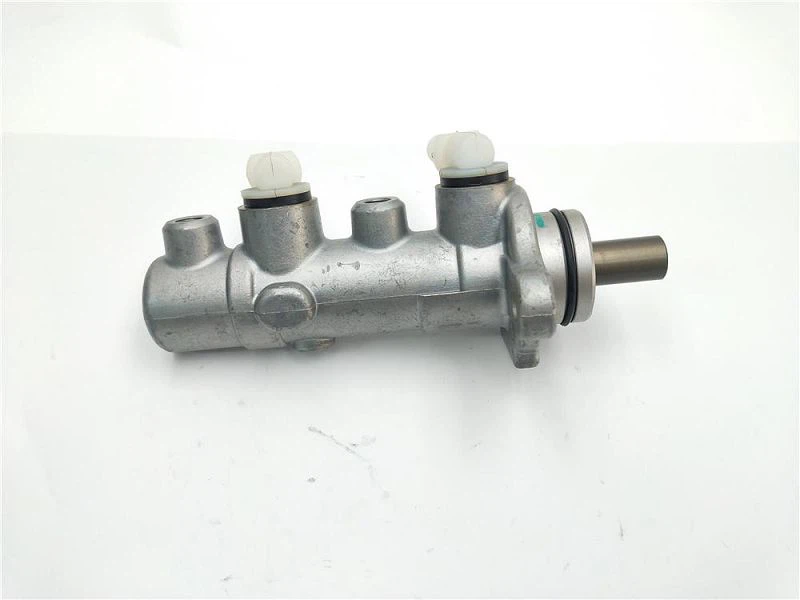
If there is air in the clutch hydraulic system, the effective stroke of the piston of the booster cylinder will be reduced, making the clutch disengaged completely, and it is difficult to engage the gear. When assembling or disassembling the oil pipe, first unscrew the booster cylinder bleed valve, add oil from the oil storage tank, and replenish the oil while stepping on the clutch pedal until the oil flows out of the bleed valve and tighten. In order to achieve the purpose of quickly and completely exhausting the air in the system, the segmentation method can be used. First remove the air from the front end of the oil pipe. After quickly depressing the clutch pedal 2-3 times during exhaust, loosen the bottom. Loosen the nut of the master cylinder connection tube. The air from the front section is discharged from here. Just 4-6 times. The installation position of the oil pipe in the middle section of the oil pipe is relatively high, and it is easy to accumulate air. The aforementioned method can be used to exhaust the air release valve in the middle of the oil pipe. At this time, the hydraulic line is almost full of oil, stepping on the clutch pedal, the booster cylinder piston push rod has moved slightly, you can start the engine to inflate, and shut down the engine after the air pressure is full. The function of pumping up is to use the booster cylinder to boost the pedal force.
Car clutch maintenance method
1. Due to the long-term exposed work of the separation bearing, the lubrication conditions are very poor, so after every 300 to 500 hours of tractor operation, the separation bearing should be removed and cleaned with diesel to make it rotate flexibly. Then put it in a container filled with butter and heat it until the butter soaks the bearing. After cooling and solidifying, take it out and install it.
2. The separation claw and the spiral inclined surface of the bearing cover should be cleaned and lubricated with engine oil or butter, and oil should be dripped into the small oil hole on the separation claw to lubricate the separation claw and the separation claw seat.
3. When oil or rust on the friction plate, active plate and pressure plate in the clutch is disassembled, it should be disassembled and removed, and cleaned with gasoline or kerosene, and then dried and installed.
4. After cleaning or replacing the clutch bearing, apply the appropriate amount of butter, and make the side with the dust cover face the clutch. It must not be reversed to prevent oil from flowing into the clutch and making the clutch slip.
5. Periodically adjust the operating mechanism of the clutch, remove dirt, tighten all connecting bolts, and lubricate the clutch pedal shaft as specified.
6. If it is found that the friction plate exposes the rivet head, cracks, breakage, large-area scorching, and each friction plate wears to a thickness of less than 3.4 mm, new friction plates should be replaced.